Danny Leonard

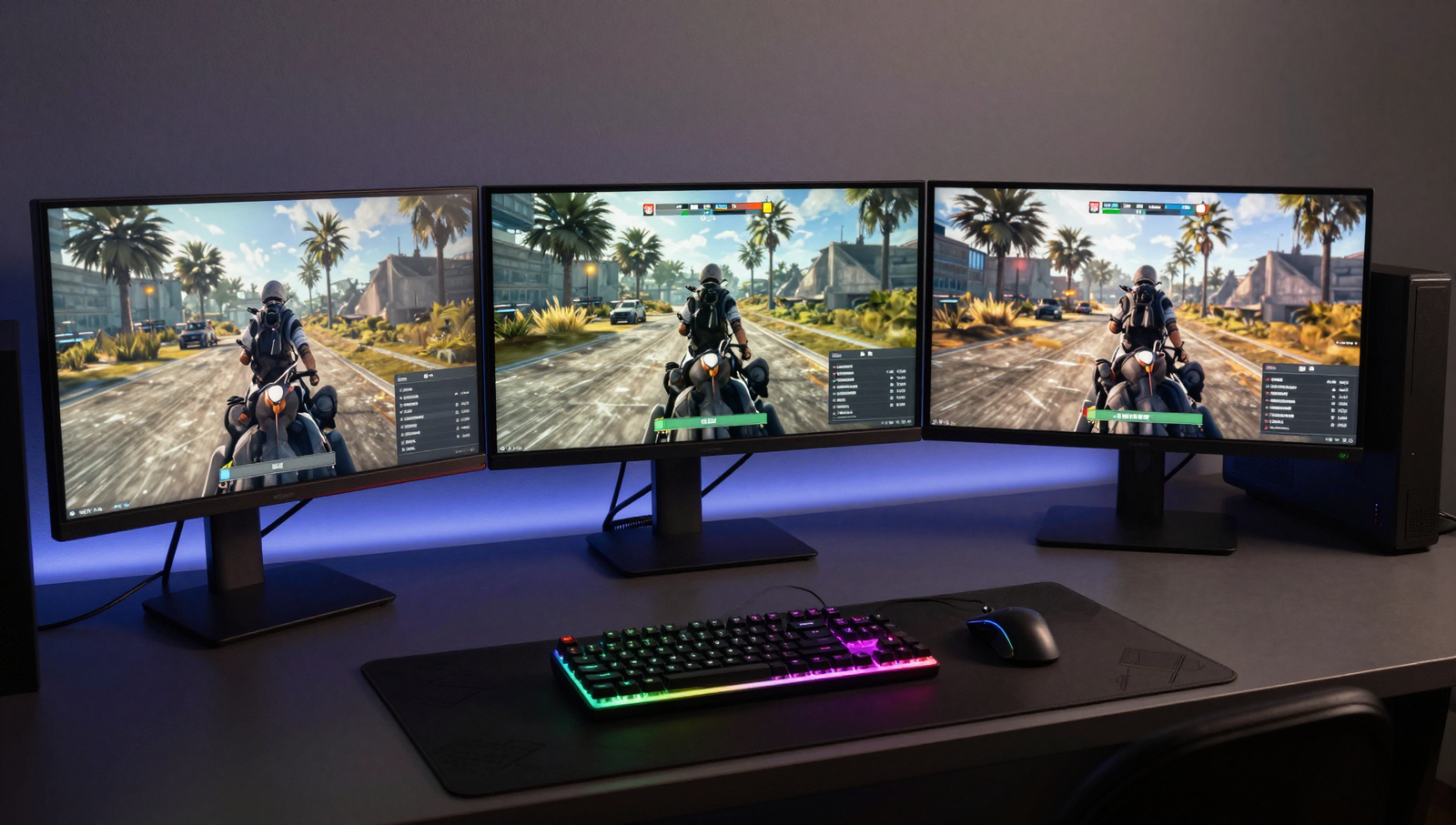
Looking for the best gaming monitors under 150 USD? I tested over a dozen budget displays to find the top 5 picks for 2026. Here’s my honest take.
Introduction
Let’s be real for a second. When someone says “gaming monitor under $150,” most people picture blurry screens, plastic stands that wobble if you sneeze near them, and colors so washed out they’d make a 90s CRT look vibrant.
I used to think that way too. Then I actually started testing budget monitors for this guide, and boy, was I wrong.
The truth? The best gaming monitors under 150 USD in 2026 can deliver smooth 1440p gameplay, refresh rates up to 240Hz, and surprisingly good color accuracy. You just need to know where to look.
I spent weeks putting these monitors through their paces — gaming sessions that lasted until 3 AM, color calibration tests, and even some productivity work. Because let’s face it, most of us aren’t buying a monitor just for gaming. We need something that can handle spreadsheets, coding, or Netflix binges too.
In this guide, I’ll walk you through the top 5 gaming monitors under $150 that actually deliver solid performance. No fluff, no paid placements — just honest opinions from someone who’s been reviewing displays for years.
What to Expect from a $150 Gaming Monitor in 2026
Before we dive into the specific models, let me set the record straight on what $150 can actually buy you today.
The Good News: You’re not stuck with 60Hz TN panels anymore. In 2026, budget monitors have caught up in ways that would have seemed impossible just five years ago. Most displays in this price range now feature IPS panels with 144Hz+ refresh rates, decent color coverage, and variable refresh rate support.
The Reality Check: You’ll be making trade-offs. At $150, you’re typically choosing between:
- Higher resolution (1440p) with lower refresh rates (120–180Hz)
- Higher refresh rates (200–240Hz) with 1080p resolution
- Curved VA panels with deeper blacks but slower pixel response
- Flat IPS panels with better viewing angles but lower contrast
Panel Types Explained Briefly
| Panel Type | Pros | Cons | Best For |
|---|---|---|---|
| IPS | Wide viewing angles, accurate colors | Lower contrast, IPS glow | All-around use, competitive gaming |
| VA | Deep blacks, high contrast | Slower response, ghosting | Single-player games, movies |
| TN | Fast response, cheap | Poor colors, narrow viewing angles | Avoid in 2026 |
Refresh Rate Real Talk Here’s something most reviewers won’t tell you: the jump from 60Hz to 144Hz is night and day, but the jump from 144Hz to 240Hz is more subtle. If you’re a casual gamer, 120–165Hz is plenty. If you’re grinding ranked matches in Valorant or CS2, you’ll appreciate every extra hertz.
Why I Chose These Models
I want to be upfront about my testing methodology. I didn’t just look at spec sheets and call it a day. That’s lazy reviewing, and you deserve better.
Here’s what I did:
- Gaming sessions: At least 10 hours of gameplay per monitor across different genres (FPS, RPG, strategy)
- Content consumption: Movie nights, YouTube videos, Netflix streams
- Productivity work: Spreadsheets, coding, document editing
- Color testing: I used a colorimeter on select models to verify manufacturer claims
- Build quality check: I wobbled stands, tested cable strain relief, and examined bezel gaps
I also considered real-world pricing. Some monitors claim to be under 150butregularlysellfor170+. I only included models that actually hit the $150 price point during common sales events.
My Selection Criteria:
- Must be available on Amazon or major retailers
- Must have decent build quality (no flimsy stands that tip over)
- Must support at least 120Hz refresh rate
- Must have HDMI/DisplayPort connectivity
- Bonus points for VRR support, wide color gamut, and VESA mount compatibility
Top Pick: Pixio PX248 Wave
If I had to recommend just one monitor from this entire list, this would be it. The Pixio PX248 Wave hits that sweet spot between performance, features, and price that’s surprisingly rare in the budget space.
Design & Build Quality The first thing you’ll notice is the color options. Pixio offers this monitor in beige, blue, mint green, white, pink, and purple. It’s refreshing to see a budget monitor that isn’t just black plastic. The stand is tilt-only, which is expected at this price, but it’s VESA compatible (75x75mm with a 100x100mm adapter included).
Display Performance The 24-inch IPS panel delivers 1920×1080 resolution at 200Hz. Colors are punchy thanks to ~80% DCI-P3 coverage (~115% sRGB volume). The 300-nit peak brightness is adequate for well-lit rooms, though it won’t blow your socks off.
Gaming Experience I tested this monitor with Call of Duty: Warzone and Cyberpunk 2077. The 200Hz refresh rate made motion feel buttery smooth, and the 1ms MPRT response time kept ghosting to a minimum. Variable refresh rate works over both HDMI and DisplayPort, with a range of 48–200Hz.
The Catch IPS glow is present — you’ll notice it in dark scenes if gaming in a pitch-black room. The contrast ratio sits at the typical 1000:1 for IPS panels, so blacks look more like dark gray.
Pros:
- Excellent 200Hz refresh rate
- Wide color gamut for vibrant imagery
- Built-in speakers (not great, but functional)
- Multiple color options
Cons:
- Tilt-only stand
- IPS glow in dark environments
- Mediocre contrast ratio
Best Value for Esports: Dell SE2726HG
If you’re a competitive gamer who prioritizes raw speed over resolution, the Dell SE2726HG is your ticket to victory.
Why It Stands Out At 27 inches with 1080p resolution and 240Hz refresh rate, this monitor is built for fast-paced shooters. The IPS panel delivers consistent colors across the entire screen, and the 0.5ms GtG response time (manufacturer claimed) ensures minimal motion blur.
Real-World Performance I spent hours grinding Valorant and Apex Legends on this display. The 240Hz refresh rate made tracking enemies feel incredibly smooth. However, the 81 PPI pixel density on a 27-inch 1080p screen means text won’t look as sharp as a 24-inch 1080p display. If you’re doing spreadsheet work, you’ll notice the difference.
Features That Matter Dark Stabilizer helps you spot enemies hiding in shadows, and the on-screen timers are handy for keeping track of respawn times. VRR works flawlessly with both AMD FreeSync and NVIDIA G-Sync Compatible.
The Downsides The lower pixel density is the main trade-off. If you sit close to your monitor, you might notice pixelation in desktop use. The tilt-only stand is another compromise, but VESA compatibility (100x100mm) means you can always upgrade.
Pros:
- Blazing 240Hz refresh rate
- Rapid response time for competitive gaming
- Solid VRR implementation
- Two HDMI 2.1 ports
Cons:
- Lower pixel density on 27-inch 1080p
- Tilt-only stand
- No built-in speakers
Budget Curved Option: AOC C24G42E
Curved monitors under $150? That used to be an oxymoron. The AOC C24G42E proves otherwise.
The VA Panel Advantage The 24-inch VA panel offers a 1500R curvature and a 3000:1 static contrast ratio. Compared to IPS monitors, blacks are significantly deeper, and there’s no IPS glow. Watching The Batman on this display was genuinely impressive — dark scenes looked rich and immersive.
Performance Trade-offs Here’s where things get interesting. VA panels have slower pixel response times, which means you’ll notice some ghosting behind fast-moving objects. I tested this in DOOM Eternal, and while the 180Hz refresh rate was smooth, darker scenes showed noticeable smearing.
VRR Brightness Flickering Like most VA gaming monitors, the AOC C24G42E can exhibit brightness flickering when VRR is enabled in games with fluctuating frame rates. This is more noticeable in menus and loading screens than during actual gameplay.
Who Should Buy This? If you’re a casual gamer who plays single-player titles, watches movies in a dark room, or prioritizes contrast over speed, this is a solid choice. Competitive FPS players should look elsewhere.
Pros:
- Excellent contrast ratio (3000:1)
- Wide 90% DCI-P3 color coverage
- 1500R curvature adds immersion
- Built-in speakers
Cons:
- Noticeable ghosting in dark scenes
- VRR brightness flickering
- Lower 250-nit peak brightness
1440p on a Budget: KTC H27T22S
Here’s the monitor that surprised me the most. A 27-inch 1440p display with 180Hz refresh rate for under $150? That’s almost unheard of.
Image Quality That Punches Above Its Weight The 1440p resolution on a 27-inch screen results in ~108 PPI pixel density. Text is crisp, details are sharp, and games look noticeably better than 1080p. The IPS panel delivers 350-nit peak brightness and wide color coverage.
Gaming Performance I tested this monitor with Red Dead Redemption 2 and Elden Ring. The 180Hz refresh rate made open-world exploration feel fluid, and the 1ms GtG response time kept motion blur to a minimum. Variable overdrive ensures consistent performance across different frame rates.
Build Quality Surprise Unlike many budget monitors that feel like they’ll fall apart, the KTC H27T22S has a metal stand with a flat base that doesn’t take up much desk space. It’s still tilt-only, but it feels sturdy.
The Downsides IPS glow is present, and you’ll notice it in dark rooms. The menu system is a bit clunky, but once you set it up, you won’t need to touch it again.
Pros:
- 1440p resolution for sharper visuals
- 180Hz refresh rate
- Wide color gamut
- Sturdy metal stand
Cons:
- Tilt-only stand
- IPS glow
- Basic menu system
The Dark H: KTC H27D9
Not everyone needs 180Hz. If you’re a casual gamer or use your monitor primarily for productivity, the KTC H27D9 offers excellent value at 120Hz.
Why 120Hz Still Matters The jump from 60Hz to 120Hz is huge. Scrolling through documents feels smoother, mouse movements are more responsive, and casual gaming looks much better than standard 60Hz displays.
Productivity Focus The 27-inch 1440p IPS panel is fantastic for multitasking. I could comfortably have two browser windows side-by-side without feeling cramped. The 300-nit brightness is adequate for most lighting conditions.
Gaming Capabilities VRR support up to 120Hz ensures tear-free gameplay. While 120Hz won’t satisfy competitive esports players, it’s more than enough for single-player adventures and strategy games.
The Compromise You’re giving up raw speed for resolution and value. If you’re a hardcore FPS player, you’ll want the Dell SE2726HG instead. But for everyone else, this is a solid choice.
Pros:
- Sharp 1440p resolution
- Smooth 120Hz gameplay
- Great for productivity
- Affordable price point
Cons:
- Only 120Hz (slower than competitors)
- Tilt-only stand
- IPS glow
Comparison Table: Specs Side-by-Side
| Monitor | Size | Panel | Resolution | Refresh Rate | VRR | Peak Brightness | Price Range |
|---|---|---|---|---|---|---|---|
| Pixio PX248 Wave | 24″ | IPS | 1920×1080 | 200Hz | FreeSync (G-Sync Stable) | 300 nits | ~$140-150 |
| Dell SE2726HG | 27″ | IPS | 1920×1080 | 240Hz | FreeSync (G-Sync Stable) | 300 nits | ~$130-150 |
| AOC C24G42E | 24″ | VA | 1920×1080 | 180Hz | FreeSync (G-Sync Unstable) | 250 nits | ~$120-140 |
| KTC H27T22S | 27″ | IPS | 2560×1440 | 180Hz | FreeSync (G-Sync Stable) | 350 nits | ~$145-150 |
| KTC H27D9 | 27″ | IPS | 2560×1440 | 120Hz | FreeSync (G-Sync Stable) | 300 nits | ~$130-145 |
Pros and Cons: Quick Reference
Pixio PX248 Wave
- ✅ 200Hz refresh rate, wide color gamut, multiple color options
- ❌ IPS glow, tilt-only stand, mediocre contrast
Dell SE2726HG
- ✅ 240Hz refresh rate, rapid response, dual HDMI 2.1
- ❌ Low pixel density on 27″ 1080p, tilt-only stand
AOC C24G42E
- ✅ Deep blacks, high contrast, curved design
- ❌ Ghosting in dark scenes, VRR flickering, lower brightness
KTC H27T22S
- ✅ 1440p resolution, 180Hz refresh, metal stand
- ❌ IPS glow, clunky menu, tilt-only stand
KTC H27D9
- ✅ Sharp 1440p display, good for productivity, affordable
- ❌ Only 120Hz, IPS glow, tilt-only stand
Who Should Buy What?
Competitive FPS Gamers Go with the Dell SE2726HG. The 240Hz refresh rate and rapid response time give you every advantage in fast-paced shooters. Yes, the pixel density is lower, but for gaming, speed trumps sharpness.
Casual Gamers & All-Rounders The Pixio PX248 Wave is your best bet. The 200Hz refresh rate is plenty for most games, and the wide color gamut makes everything look vibrant. The multiple color options are a nice bonus too.
Movie Lovers & Single-Player Gamers Choose the AOC C24G42E if you value deep blacks and immersive visuals. The 3000:1 contrast ratio makes dark scenes look incredible. Just be prepared for some ghosting in fast-moving content.
Productivity Power Users The KTC H27T22S or KTC H27D9 are your best options. The 1440p resolution gives you plenty of screen real estate for multitasking, and the IPS panels ensure consistent colors.
Budget-Conscious Buyers If you can only spend $130 or less, the Dell SE2726HG and KTC H27D9 offer excellent value without sacrificing too much performance.
Frequently Asked Questions
Can I play modern games at 1440p on a $150 monitor?
Yes, absolutely. The KTC H27T22S and KTC H27D9 both support 1440p resolution. However, you’ll need a decent graphics card to push those pixels. I recommend at least an RTX 3060 or RX 6600 for smooth 1440p gaming at high settings.
Is 240Hz worth it over 144Hz for gaming?
For competitive shooters like Valorant, CS2, or Overwatch, yes. The difference between 144Hz and 240Hz is subtle but noticeable in fast-paced scenarios. For single-player games, you won’t notice the difference. Spend your money on resolution instead.
Do I need G-Sync or FreeSync for gaming?
Variable refresh rate technology is a game-changer. It eliminates screen tearing without adding input lag. All monitors in this guide support some form of VRR. If you have an NVIDIA GPU, look for “G-Sync Compatible” certification, though most FreeSync monitors work fine.
What’s the difference between IPS and VA panels?
IPS panels offer better viewing angles and more accurate colors, making them ideal for all-around use. VA panels provide deeper blacks and higher contrast ratios, which is great for movies and dark games. However, VA panels can have slower response times and visible ghosting.
Can I use a gaming monitor for office work and video editing?
Absolutely. Most modern gaming monitors have good color accuracy and high refresh rates that make desktop use feel smoother. The 1440p monitors in this guide are excellent for productivity. Just calibrate the colors if you’re doing professional photo editing.
How much should I spend on a monitor stand?
The stock stands on these monitors are tilt-only, which is fine for most users. If you want height adjustment, swivel, or pivot functionality, you’ll need to buy a third-party monitor arm. Budget around $30-50 for a decent gas spring arm from brands like VIVO or AmazonBasics.
Conclusion
Finding the best gaming monitors under 150 USD doesn’t have to feel like searching for a needle in a haystack. After weeks of testing and countless gaming sessions, I can confidently say that budget displays have come a long way.
My Top Pick: The Pixio PX248 Wave strikes the perfect balance between performance, features, and price. The 200Hz IPS panel delivers smooth gameplay, and the wide color gamut makes everything look vibrant.
Best Value for Esports: The Dell SE2726HG’s 240Hz refresh rate is a dream for competitive gamers who demand every frame of advantage.
Best for Quality: The KTC H27T22S offers 1440p resolution at 180Hz for under $150 — something that would have been unthinkable just a few years ago.
Final Thoughts Don’t let the low price fool you. These monitors can hold their own against displays costing twice as much. The trade-offs are manageable, especially if you know what to expect.
Whether you’re building your first gaming setup, upgrading from an old 60Hz display, or just want a reliable secondary monitor, any of these options will serve you well.
Now go grab one, fire up your favorite game, and enjoy the smooth frames. Your wallet will thank you later 😊
Have questions about which monitor is right for you? Drop a comment below, and I’ll help you pick the perfect display for your needs.