Billy Noble
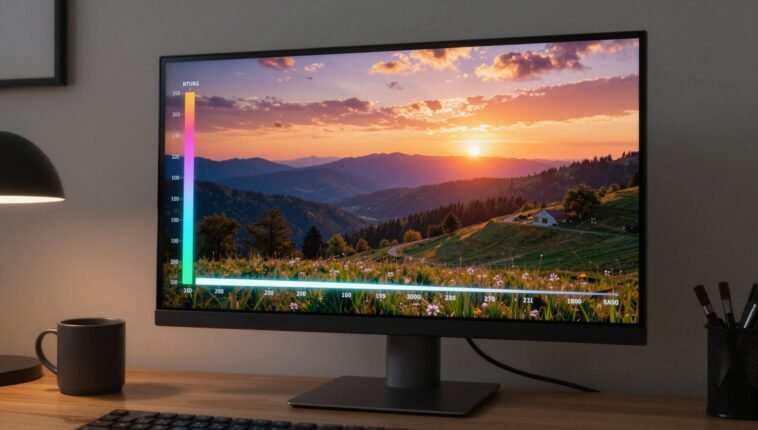
Introduction: The Brightness Trap We All Fall Into
Let me paint you a picture. You’re scrolling through Amazon at 2 AM, looking for a new monitor. You see a flashy ad screaming “600 NITS! SUPER BRIGHT!” and your brain immediately goes, “Ooh, more must be better, right?” I’ve been there. I’ve fallen for it. And frankly, I’ve regretted it.
Here’s the thing about monitor brightness — it’s like hot sauce. A little adds flavor, but dump the whole bottle, and you’re just crying into your keyboard. 🌶️
I’ve spent the last decade reviewing monitors, everything from 150budgetofficedisplaysto3,000 professional color-grading beasts. And if there’s one question I get more than any other, it’s this: How many monitor nits do you need for the best display?
The short answer? For most people, 250 to 350 nits is the sweet spot. But the real answer depends on what you do, where you sit, and how much you value your retinas.
In this guide, I’ll walk you through everything I’ve learned about monitor brightness — nit values, real-world testing, eye comfort, and when more actually matters. Let’s cut through the marketing fluff and get real.
What Even Is a Nit? (And Why Should You Care?)
Before we dive into how many monitor nits you need for the best display, let me explain what a nit actually is without boring you to tears.
A nit is a unit of luminance — basically, how much light a screen emits per square meter. One nit equals one candela per square meter (1 cd/m2). In plain English? It’s the brightness you see coming off your screen.
Think of it like this:
- A candle produces about 1 nit of light
- A typical living room is around 50–150 nits
- A phone screen in direct sunlight? That’s pushing 600–1,000 nits
Now, here’s where it gets interesting. When monitor manufacturers advertise “400 nits” or “600 nits,” they’re usually talking about peak brightness — the absolute maximum the screen can hit for a few seconds in HDR content. The everyday, standard brightness is often much lower.
I’ve tested dozens of monitors with a colorimeter, and here’s what I’ve found:
| Usage Scenario | Ideal Brightness (Nits) | Typical Monitor Range |
|---|---|---|
| Office work / coding | 100–250 | 200–350 |
| Photo editing (sRGB) | 100–120 | 200–400 |
| Casual web browsing | 200–350 | 250–400 |
| Console gaming (SDR) | 200–350 | 250–500 |
| HDR gaming / movies | 400–1000+ | 400–1000 |
| Outdoor / bright room | 350–600 | 300–600 |
See a pattern? Most everyday tasks don’t need blinding brightness. In fact, running a monitor at max brightness all day is like driving with your high beams on — aggressive and exhausting.
The Truth About Brightness and Eye Strain
Let me tell you about the time I reviewed a 600-nit gaming monitor for two weeks straight. By day five, I had headaches so bad I thought I needed glasses. Turns out, my eyes were just begging for mercy. 😩
Here’s what the science says: How many monitor nits do you need for the best display is directly tied to your ambient lighting. If you’re working in a dark room (like most gamers at 2 AM), anything above 200–300 nits is overkill. Your pupils are dilated, so bright screens feel like staring into the sun.
On the flip side, if your home office is a sun-drenched solarium, you might need 400+ nits just to see past the glare.
Why High Brightness Hurts
Your eyes have muscles — specifically, the ciliary muscles that control your pupil size and lens shape. When you stare at an overly bright screen in a dark room, those muscles are constantly straining to constrict your pupils. Over hours, that leads to:
- Digital eye strain (computer vision syndrome)
- Dry eyes (you blink less when staring at bright screens)
- Headaches (especially tension headaches)
- Sleep disruption (blue light + high brightness messes with melatonin)
That’s why monitor manufacturers include features like flicker-free technology and low blue light modes. But the simplest fix? Just turn down the brightness.
My Rule of Thumb
I set my office monitor (a BenQ PD2725U) to around 120 nits for SDR work. That’s about 30–40% brightness on most displays. For gaming at night, I drop to 80–100 nits. And for HDR movies? I let the monitor auto-adjust, but peak brightness rarely exceeds 400 nits in my dim living room.
How Many Monitor Nits Do You Need for Gaming?
Ah, gaming — the land where everyone suddenly becomes a brightness snob. 🎮
Let’s talk about how many monitor nits you need for the best display when fragging noobs or exploring Hyrule.
SDR Gaming: 250–350 Nits Is Goldilocks Territory
Most PC games still run in Standard Dynamic Range (SDR) . For these, you really don’t need more than 300 nits. Here’s why:
- Competitive gamers (CS2, Valorant, Apex) actually prefer lower brightness in dark scenes to spot enemies hiding in shadows. Too much brightness washes out those details.
- Casual RPGs (Witcher 3, Skyrim, Elden Ring) look great at 250–350 nits — plenty of punch without blowing out highlights.
- Bright, colorful games (Overwatch, Fortnite, Zelda) benefit from 300–400 nits to make those vibrant colors pop.
HDR Gaming: Where Brightness Actually Matters
If you’re gaming in HDR (High Dynamic Range), the story changes. HDR is designed to show both deep blacks AND bright highlights — think explosions, sunlight, neon signs. For that, you need:
| HDR Level | Minimum Brightness | My Recommendation |
|---|---|---|
| HDR400 (entry) | 400 nits | Barely worth it |
| HDR600 (good) | 600 nits | Solid for most gamers |
| HDR1000 (great) | 1000 nits | Excellent experience |
| HDR1400+ (pro) | 1400+ nits | Overkill for 99% of people |
But here’s the kicker: Peak brightness ≠ sustained brightness. Many “600-nit” monitors can only hit that for a few seconds before dropping. I’ve tested monitors that advertise 600 nits but average 350–400 nits in real gameplay.
Verdict? For SDR gaming, 250–350 nits is plenty. For HDR gaming, aim for at least 600 nits, but don’t sacrifice color accuracy or response time just for brightness.
How Many Monitor Nits Do You Need for Professional Work?
This is where things get nuanced. If you’re a creative professional, how many monitor nits do you need for the best display depends entirely on your workflow.
Photo and Video Editing: 100–120 Nits (Yes, Really)
I can already hear the gasps. “But I need bright colors!” Nope. Not if you want accurate colors.
Here’s the secret the pros know: All SDR color standards (sRGB, Adobe RGB, Rec.709, DCI-P3) are calibrated at 100–120 nits. That’s it.
When I reviewed the BenQ SW321C (a $2,000+ professional monitor), its factory calibration report showed it was calibrated at 100 nits. Why? Because that’s the standard brightness for color grading. If you edit photos at 400 nits, your prints will look dark and muddy because print paper doesn’t emit light.
For professional work, focus on:
- Delta E ≤ 2 (color accuracy metric — lower is better)
- Color gamut coverage (99%+ Adobe RGB or DCI-P3)
- Hardware calibration support
- Uniformity (even brightness across the screen)
Coding and Office Work: 150–250 Nits
If you’re a programmer, writer, or spreadsheet warrior, you don’t need a brightness beast. I use a BenQ RD280U for coding, and I keep it at 180 nits — comfortable for 8-hour days without eye fatigue.
Look for monitors with:
- Flicker-free backlight (reduces eye strain)
- Low blue light mode (helps with sleep)
- Anti-glare coating (reduces reflections)
- Height-adjustable stand (ergonomics matter)
HDR Color Grading: 400–1000 Nits
If you’re grading HDR content for Netflix, YouTube, or film, you need HDR reference monitors that can hit 400–1,000 nits. But these are specialized tools — not your everyday browsing monitor.
The Myth of “More Is Better” — Why 100–300 Nits Is the Sweet Spot
Let me share a story that changed my perspective on how many monitor nits you need for the best display.
A few years ago, I bought a “gaming monitor” with 600 nits peak brightness. I was so excited. I plugged it in, cranked the brightness to 100%, and… immediately regretted it. My eyes hurt within 30 minutes. Colors looked washed out. Blacks looked gray. It was awful.
I dropped the brightness to 40% (about 240 nits), and suddenly everything looked perfect. The blacks were deep. The colors were rich. My eyes stopped burning.
What the Industry Standards Say
In manufacturer testing labs, SDR monitors are calibrated to 100 nits in dark rooms. At that level, they can achieve black levels of 0.001 to 0.03 nits — that’s a contrast ratio of 100,000:1 on an OLED or 1,000:1 on a good IPS LCD.
The suggested brightness for SDR content follows industrial standards:
- sRGB display standard: 80–120 nits
- Rec.709 broadcast standard: 100 nits
- DCI-P3 cinema standard: 48 nits (for movie theaters) or 100 nits (for home mastering)
So when someone tells you that 600 nits is “better,” they’re either trying to sell you something or they’ve never actually calibrated a monitor.
The Only Exception: Bright Rooms
If you work next to a window that gets direct sunlight, you might need 400+ nits just to overcome glare. But that’s a room problem, not a monitor problem. Get blinds. Trust me.
HDR vs. SDR Brightness: What’s the Real Difference?
I get asked about HDR brightness constantly. People see “HDR600” or “HDR1000” and assume that’s the brightness they need for everything. Let me clear this up.
SDR Brightness (100–300 Nits)
Standard Dynamic Range is what 99% of content uses — YouTube, Netflix (most shows), PC games (most), web browsing, Microsoft Office, photo editing. SDR brightness is typically 100–300 nits.
SDR monitors are designed for consistent, even brightness across the screen. The goal is to match the brightness of print media and broadcast standards.
HDR Brightness (400–1000+ Nits)
High Dynamic Range uses expanded brightness to show more detail in bright areas (sunlight, explosions, reflections) while maintaining deep blacks. But here’s the thing: HDR is not “always bright.” It’s about dynamic range — the difference between the darkest and brightest parts of an image.
In HDR content:
- A starry night sky might be 0.01 nits (stars) to 100 nits (moonlight)
- A sunrise scene might span 50 nits (dark foreground) to 1,000 nits (sun)
- Explosions and lightning strikes can hit peak brightness briefly
My HDR Testing Experience
I tested HDR on three monitors side by side:
| Monitor | HDR Spec | Real-World HDR | SDR Brightness |
|---|---|---|---|
| Standard IPS | HDR400 | Meh | 250 nits |
| High-end IPS | HDR600 | Good | 350 nits |
| Mini-LED | HDR1000 | Excellent | 500 nits |
The HDR600 and HDR1000 monitors had noticeably better highlight detail. But in SDR (which is 95% of what I do), they all looked similar at the same brightness setting.
Bottom line? If you watch a lot of HDR movies or play HDR games, invest in at least HDR600. If you mostly browse Reddit and edit spreadsheets, 250 nits is fine.
Comparing Brightness Across Panel Types (IPS, VA, OLED)
Not all nits are created equal. The panel technology significantly affects how brightness looks and feels.
IPS (In-Plane Switching)
Typical brightness: 250–400 nits (SDR), up to 1,000+ nits (HDR with Mini-LED)
IPS panels are the most common in monitors. They offer good brightness uniformity and wide viewing angles. However, IPS has a weakness: IPS glow — a slight haze in dark corners that becomes more noticeable at higher brightness.
For IPS, how many monitor nits you need for the best display depends on the room. In a dim room, 250–300 nits is comfortable. In a bright room, 350–400 nits helps fight glare.
Best for: General use, photo editing, office work
VA (Vertical Alignment)
Typical brightness: 250–400 nits (SDR), up to 600+ nits (HDR)
VA panels have higher contrast than IPS (typically 3,000:1 vs 1,000:1), which means deeper blacks. At the same brightness level, VA looks punchier because of the contrast advantage. However, VA has narrower viewing angles and can look washed out off-center.
Best for: Gaming (especially dark games), movies
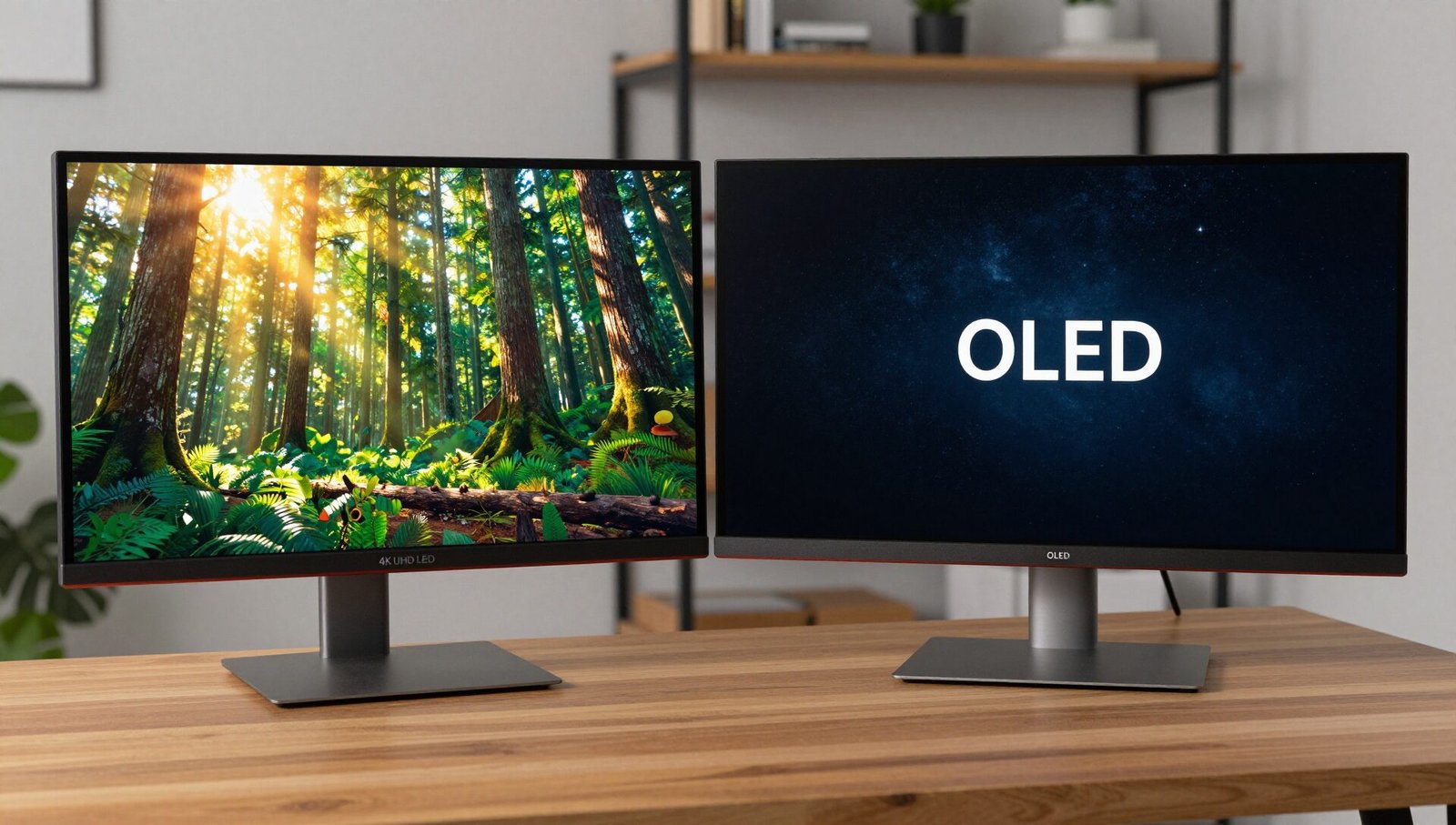
OLED (Organic Light Emitting Diode)
Typical brightness: 200–400 nits (SDR), 400–1,000+ nits (HDR)
OLED is a different beast. Because each pixel creates its own light, OLED can achieve true blacks (0 nits) and infinite contrast. However, OLED has lower sustained brightness than high-end LED monitors — typically 200–350 nits for full-screen white content.
In HDR, OLED can hit 400–1,000 nits for small highlights (like a bright star or explosion), but the average picture brightness is lower than LED.
Best for: HDR movies, dark room gaming, color-critical work (monitor OLED)
My Pick
For most users, a good IPS panel with 300–350 nits is the sweet spot. If you’re a competitive gamer, consider VA for better contrast. If you’re a home theater enthusiast, OLED is unbeatable for HDR movies.
Features That Matter More Than Raw Brightness
Let’s talk about the unsung heroes of monitor quality — features that affect your experience more than max nits ever will.
Flicker-Free Technology
Many monitors use Pulse Width Modulation (PWM) to control brightness. At low brightness settings, PWM can cause visible flickering — even if you don’t consciously see it, your eyes detect it. Over time, that causes eye strain and headaches.
I always recommend monitors with DC dimming (true flicker-free) or high-frequency PWM (above 1,000 Hz). Most modern BenQ, Dell, and ASUS monitors have this feature.
Anti-Glare Coating
This is a bigger deal than you think. A matte anti-glare coating diffuses ambient light, reducing reflections. But it can also make the image look slightly grainy (the “sparkle” effect). A glossy screen has better clarity but acts like a mirror in bright rooms.
For bright home offices, I prefer light matte coatings (like BenQ’s Nano Matte or Dell’s 3H hardness coating). For dark rooms, glossy is fine.
Color Temperature Adjustment
Most monitors let you tweak color temperature (warm vs. cool). This affects perceived brightness too — warmer tones look dimmer than cool blue tones at the same nit level. I keep my monitors at 6500K (standard daylight) for accurate colors.
Height Adjustable Stand (Ergonomics)
You can have the brightest monitor in the world, but if it’s too high or too low, you’ll hate it. A good height-adjustable stand with tilt, swivel, and pivot is worth its weight in gold.
My rule: The top of the screen should be at or slightly below eye level. The center should be 20–30 degrees below eye level. Distance? About an arm’s length (50–70 cm).
Recommended Monitors for Every Brightness Need
Based on my years of testing, here are my top picks for different use cases. I focused on monitors that balance brightness, accuracy, and value.
Best for Office and Coding (250–350 Nits)
| Monitor | Brightness | Panel | Why I Like It |
|---|---|---|---|
| BenQ RD280U | 300 nits | IPS | MoonHalo backlight for eye comfort |
| Dell U2723QE | 350 nits | IPS Black | Great contrast for office work |
| LG 27UP850N | 350 nits | IPS | USB-C with 90W charging |
Best for Photo and Video Editing (100–120 Nits Calibrated)
| Monitor | Brightness | Coverage | Why I Like It |
|---|---|---|---|
| BenQ SW272U | 300 nits (peak) | 99% Adobe RGB | Factory-calibrated to 100 nits |
| ASUS ProArt PA279CRV | 350 nits | 99% DCI-P3 | Great value for creators |
| Eizo ColorEdge CG2700S | 350 nits | 99% Adobe RGB | Built-in calibrator |
Best for HDR Gaming (400–1000 Nits)
| Monitor | Brightness | HDR | Panel |
|---|---|---|---|
| Samsung Odyssey Neo G7 | 600 nits | HDR600 | Mini-LED VA |
| LG 27GP950 | 600 nits | HDR600 | Nano IPS |
| Alienware AW3423DWF | 1,000 nits (peak) | HDR1000 | QD-OLED |
Pros and Cons of High Brightness Monitors
✅ Pros
- Better HDR performance — highlights pop, colors glow
- More usable in bright rooms — fights window glare
- Better for HDR content creation — grade with confidence
- Future-proof — HDR is becoming more common
❌ Cons
- Causes eye strain — especially in dim rooms
- Higher power consumption — more nits = more electricity
- Lower contrast — bright IPS panels can look gray in dark scenes
- More expensive — high-brightness panels cost more
- Faster wear on OLED — sustained high brightness reduces lifespan
My Honest Take
Unless you’re an HDR colorist or a competitive gamer in a bright room, I’d rather see you spend your money on color accuracy, contrast, and ergonomics than raw brightness. A 300-nit monitor with great color and a good stand beats a 600-nit monitor with average everything else.
Frequently Asked Questions
What is a nit in monitor brightness?
A nit is a unit of luminance that measures how much light a screen emits. One nit equals one candela per square meter. Think of it as the brightness your eyes actually see coming from the display. Higher nits mean brighter screens, but more isn’t always better for comfort.
Is 300 nits enough for a monitor?
Yes, 300 nits is plenty for most users. In fact, for SDR content (which is 95% of what you’ll use), 250–350 nits is the ideal range. Professional color-grading standards are set at just 100–120 nits. Only consider higher brightness if you watch a lot of HDR content or work in very bright rooms with direct sunlight.
Does higher brightness damage eyes?
Extended use of very high brightness (over 400 nits in dim rooms) can cause digital eye strain, headaches, dry eyes, and fatigue. Your eye muscles have to work harder to constrict pupils in bright conditions. Using adaptive brightness or keeping your monitor at comfortable levels (200–300 nits for most rooms) is better for long-term eye health.
How many nits do I need for HDR gaming?
For a good HDR experience, aim for at least 400–600 nits peak brightness. Entry-level HDR400 is barely noticeable. HDR600 offers a solid experience with visible highlights. HDR1000 and above provide excellent HDR with bright explosions, sun glare, and neon effects that really pop.
What is the difference between SDR and HDR brightness?
SDR brightness is typically 100–300 nits and stays consistent across the screen. HDR brightness can range from 400 to 1,000+ nits, but it’s dynamic — only bright parts of the image reach peak levels while dark areas stay dim. HDR is about range and contrast, not just being bright all the time.
Is 600 nits too bright for office work?
For most office environments, 600 nits is overkill and can cause discomfort. Standard office monitors are designed for 250–350 nits. If you have a very bright room with large windows, you might benefit from higher brightness, but blinds or curtains are a more practical solution. Your eyes will thank you.
Conclusion: What I’ve Learned About Monitor Brightness
After testing more monitors than my wife thinks is healthy (hi, honey 👋), here’s my final take on how many monitor nits you need for the best display:
For most people, 250–350 nits is the sweet spot. It’s bright enough for comfortable viewing in typical indoor lighting, gentle on your eyes during long work sessions, and perfectly adequate for SDR content.
If you’re into HDR — either as a gamer or a content creator — look for at least 400–600 nits. But remember that HDR brightness is about peak highlights, not everyday use. You’ll still want to run your monitor at 100–200 nits for SDR work.
The best display isn’t the brightest. It’s the one that balances brightness with:
- Color accuracy (low Delta E)
- Proper contrast (good panel technology)
- Eye comfort (flicker-free, low blue light)
- Ergonomics (height-adjustable stand)
- Room-appropriate brightness
I’ve learned the hard way that chasing specs on paper often leads to disappointment in practice. The monitor I use daily — a BenQ PD2725U calibrated to 120 nits — is far from the brightest I own. But it’s the most comfortable, the most accurate, and the most enjoyable to use.
So before you drop a premium on a 600-nit “gaming monitor” that’ll burn your retinas, ask yourself: Do I actually need this? The answer might surprise you.
Happy monitor hunting! 🖥️✨